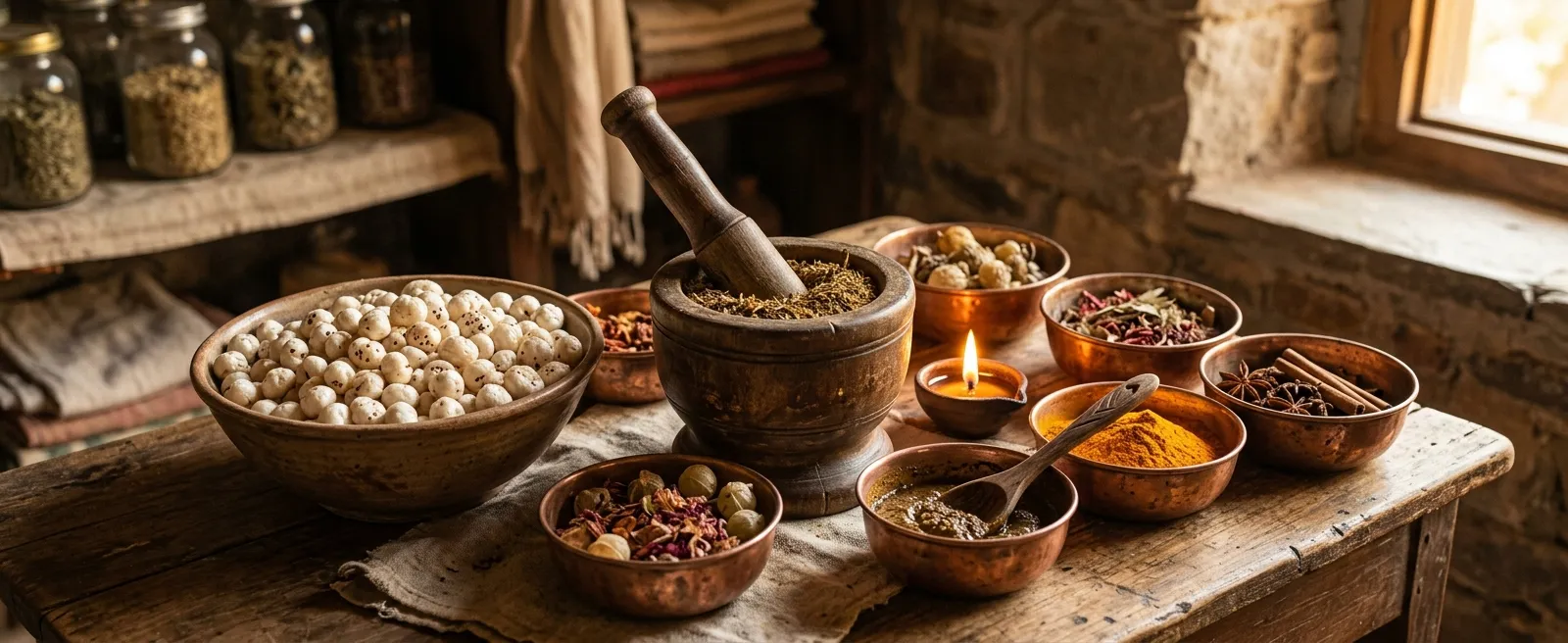
There is a peculiar kind of intellectual satisfaction in watching modern science slowly, painstakingly arrive at the same conclusion a tradition reached 3,000 years ago through observation and accumulated experience. This is the story of Makhana in Ayurveda: a food that ancient physicians categorised with extraordinary precision — its energetics, its organ affinities, its seasonal appropriateness, its contraindications — and which contemporary nutritional biochemistry is now beginning to explain in molecular terms.
This article does not romanticise the past or dismiss the present. It examines Ayurvedic texts on Makhana with the same intellectual rigour applied to peer-reviewed journals — noting where ancient claims are supported by evidence, where they remain unvalidated, and where the conversation between traditions is most productive.
Textual Origins: Makhana in the Classical Texts
Makhana appears in Ayurvedic literature under its Sanskrit name Makhāna (also written as Makhaanā or referred to by the plant name Padmabīja — lotus seed — in some regional texts). The primary classical references appear in:
- Charaka Samhita — one of the foundational texts of Ayurveda, dated approximately to 400–200 BCE, though its oral tradition significantly predates the written compilation
- Sushruta Samhita — the surgical text of Ayurveda, which classifies foods by their effects on surgical recovery and wound healing
- Ashtanga Hridayam — the 7th century CE synthesis by Vagbhata, which consolidates earlier traditions and provides the most systematic classification of Makhana's properties
- Bhavaprakasha Nighantu (16th century CE) — a comprehensive materia medica that lists Makhana under the category of Phala Varga (fruit category) with detailed pharmacological properties

This single verse encapsulates four distinct therapeutic applications — all of which find at least partial support in contemporary nutritional research. The "cooling" quality corresponds to Makhana's Ayurvedic classification as having shita virya (cooling potency), which in modern terms correlates with its anti-inflammatory bioactive profile. The "nourishing" quality corresponds to its protein and micronutrient density. The urinary benefit connects to its diuretic and kidney-protective properties validated in animal models. And the Pitta-pacifying action aligns with its anti-inflammatory and antioxidant compound content.
Ayurvedic Classification: Rasa, Virya, Vipaka, and Prabhava
Ayurveda classifies every food and medicine using a four-part framework that describes how it interacts with the body: its taste (rasa), its potency or thermal quality (virya), its post-digestive taste or metabolic effect (vipaka), and its specific unique action that may not be explained by the other three (prabhava).
- Rasa (Taste): Madhura (sweet) — the sweet taste in Ayurveda is associated with building, nourishing, and stabilising qualities. It corresponds to foods that promote tissue growth and calm the nervous system.
- Virya (Potency): Shita (cooling) — cooling foods are used to pacify Pitta dosha (the fire-water principle governing metabolism, digestion, and inflammation). This is why Makhana is traditionally recommended during summer and for conditions involving heat, inflammation, or burning sensations.
- Vipaka (Post-digestive effect): Madhura (sweet) — a sweet post-digestive taste indicates that the food is ultimately anabolic, promoting strength and tissue nourishment even after complete digestion. This makes Makhana particularly valued for recovery, convalescence, and reproductive health.
- Prabhava (Specific action): Vrishya (aphrodisiac/reproductive tonic) and Balya (strengthening) — these specific actions define Makhana's most distinctive therapeutic applications in Ayurvedic practice.
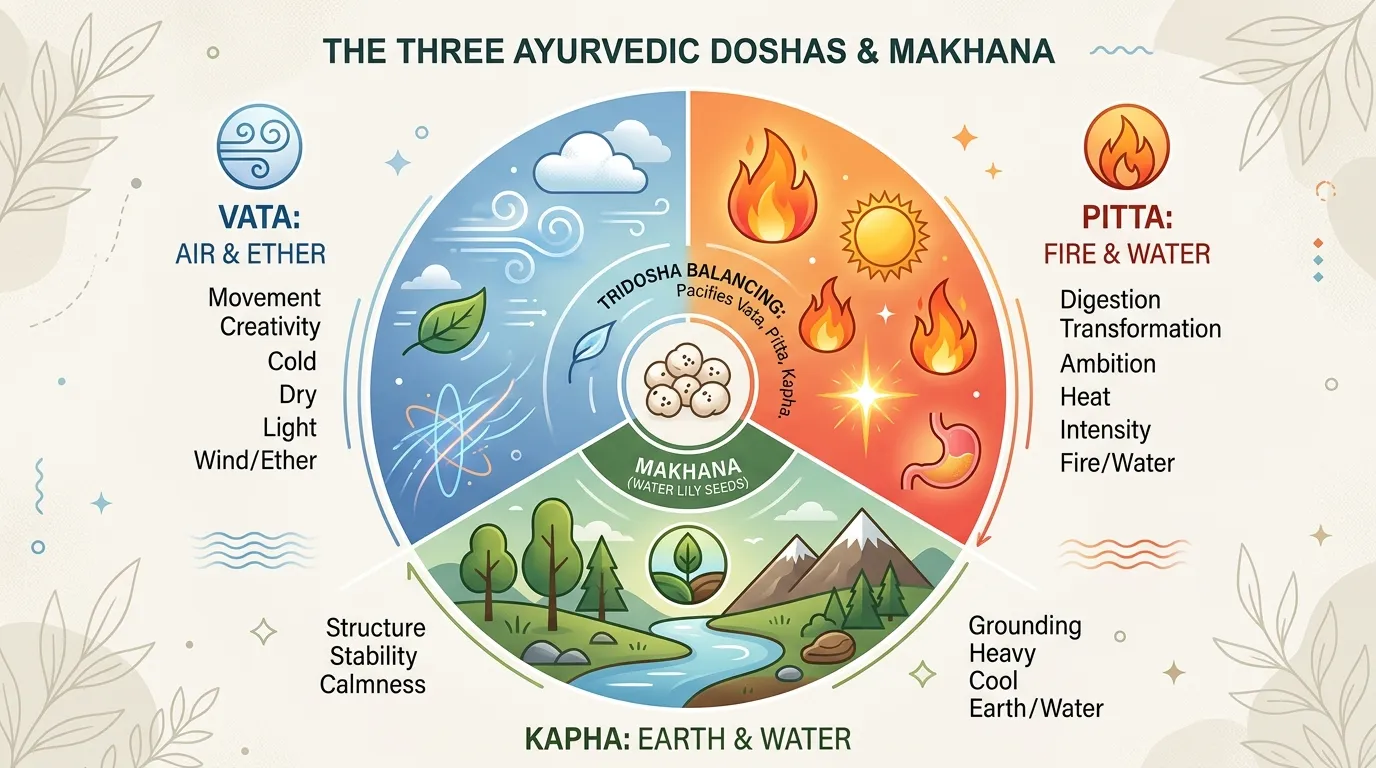
Makhana and the Three Doshas
Understanding how Makhana interacts with the three constitutional principles (doshas) is central to its Ayurvedic application. The classical position, synthesised across the primary texts, is:
Eight Therapeutic Applications: Ancient Claims and Modern Evidence
Ayurvedic practitioners have used Makhana therapeutically across eight primary applications. Below we examine each claim alongside the available modern scientific evidence — rating the evidence base with intellectual honesty.
| Ayurvedic Application | Classical Description | Modern Mechanism / Evidence | Evidence Level |
|---|---|---|---|
| Kidney Tonic | Mūtrakṛcchrahara — relieves difficult urination; supports renal function | Animal studies show E. ferox extract reduces oxidative stress in renal tissue; high potassium content supports electrolyte balance relevant to kidney function | Moderate (animal models) |
| Anti-Ageing (Rasayana) | Classified as a Rasayana food — one that promotes longevity and cellular renewal | L-isoaspartyl methyltransferase (LIMT), an enzyme involved in protein repair, is unusually concentrated in E. ferox seeds; antioxidant flavonoid content supports free radical scavenging | Moderate (in vitro) |
| Reproductive Vitality (Vrishya) | Classified as a reproductive tonic for both male and female fertility; used in post-partum recovery | Zinc content (0.9mg/100g) supports testosterone synthesis and sperm quality; magnesium is required for reproductive hormone regulation; protein supports tissue repair | Plausible (nutritional basis) |
| Digestive Support | Light to digest (laghu), supports agni (digestive fire) when prepared correctly | Dietary fibre (~14g/100g) supports gut microbiome diversity and peristalsis; resistant starch acts as a prebiotic substrate; puffing process reduces anti-nutritional factors | Well-supported |
| Cardiovascular Health | Hridya — supportive to the heart; used in conditions of chest burning and palpitations attributed to Pitta excess | β-sitosterol competes with cholesterol absorption; kaempferol inhibits LDL oxidation in vitro; potassium supports blood pressure regulation via RAAS modulation | Moderate (in vitro + epidemiological) |
| Diabetes Management | Prameha — Makhana appears in texts as food permissible in Prameha (encompassing conditions characterised by excessive urination, analogous to diabetes) | GI ~35, resistant starch content, and dietary fibre collectively blunt postprandial glucose response; animal studies show E. ferox seed extract improves insulin sensitivity markers | Well-supported |
| Leucorrhoea / Reproductive Discharge | Specifically prescribed in Shveta Pradara (white vaginal discharge) | Astringent properties of tannins in seed coat; antimicrobial flavonoids; limited clinical evidence available | Plausible (limited evidence) |
| Bone Strength | Asthi Dhatu (bone tissue) nourishment — classified as bone-strengthening | Phosphorus (200mg/100g) and calcium (60mg/100g) directly support bone mineralisation; manganese (1.9mg/100g, 95% DV) is an essential cofactor in bone matrix formation | Well-supported |
"What strikes me about Makhana's Ayurvedic profile is not any single claim, but the cumulative precision. These were not guesses — they were the distilled observations of thousands of practitioners over centuries, arrived at through systematic clinical experience."
— Kavita Rajan, Ayurvedic Wellness Writer, Quantyra Labs
Satvik Food: The Consciousness Dimension

Ayurveda's nutritional classification extends beyond macronutrients and therapeutic effects to include a food's influence on consciousness and mental quality. The three gunas — Sattva (purity, clarity), Rajas (activity, passion), and Tamas (inertia, dullness) — classify every food by its effect on the mind.
Makhana is classified as a Satvik food — the highest quality category, associated with clarity, equanimity, spiritual receptivity, and mental lightness. This classification places it alongside fresh fruits, dairy, honey, sprouted grains, and certain nuts. The practical consequence of this classification is enormous:
- Makhana is permitted during all major Hindu fasting observances including Navratri, Ekadashi, Janmashtami, Mahashivratri, and Paryushana (Jain)
- It is recommended as food for monks, practitioners of meditation and yoga, and students engaged in intellectual work
- It is one of the few snack foods acceptable in the Satvik diet observed by many devout Hindu, Jain, and Brahmin households — a market segment comprising hundreds of millions of consumers globally
- It is considered appropriate for feeding to infants, the elderly, and convalescents due to its easy digestibility and nourishing quality
This cultural-religious dimension of Makhana's classification is not merely historical sentiment — it drives significant and predictable seasonal demand patterns. During Navratri alone (nine-day festival observed twice yearly), Makhana consumption in India surges by an estimated 300–400%, representing one of the most reliable seasonal food demand spikes in the Indian market.
Seasonal Prescriptions: Ritucharya
Ayurveda's Ritucharya (seasonal regimen) prescribes dietary adjustments across six seasons as the dominant dosha shifts with environmental conditions. Makhana's seasonal recommendations in classical texts reveal a sophisticated understanding of its thermal properties:
- Grishma (Summer, May–July): Highest Ayurvedic recommendation. The cooling virya of Makhana directly counteracts the summer Pitta aggravation. Traditional Makhana kheer (sweet pudding with milk and sugar) is a specific summer preparation mentioned in several texts.
- Sharad (Autumn, September–November): Also recommended — Sharad is considered a particularly "Pitta-aggravating" season as residual summer heat is expressed through the body.
- Hemanta and Shishira (Winter, November–March): Used with caution in excess, as the cooling quality is less desirable in cold seasons. Typically prepared with warming spices (black pepper, cardamom, ghee) to balance the virya.
- Vasanta (Spring, March–May): Moderate use — spring is Kapha season, and Makhana's sweet/heavy qualities should be balanced by preparation methods.
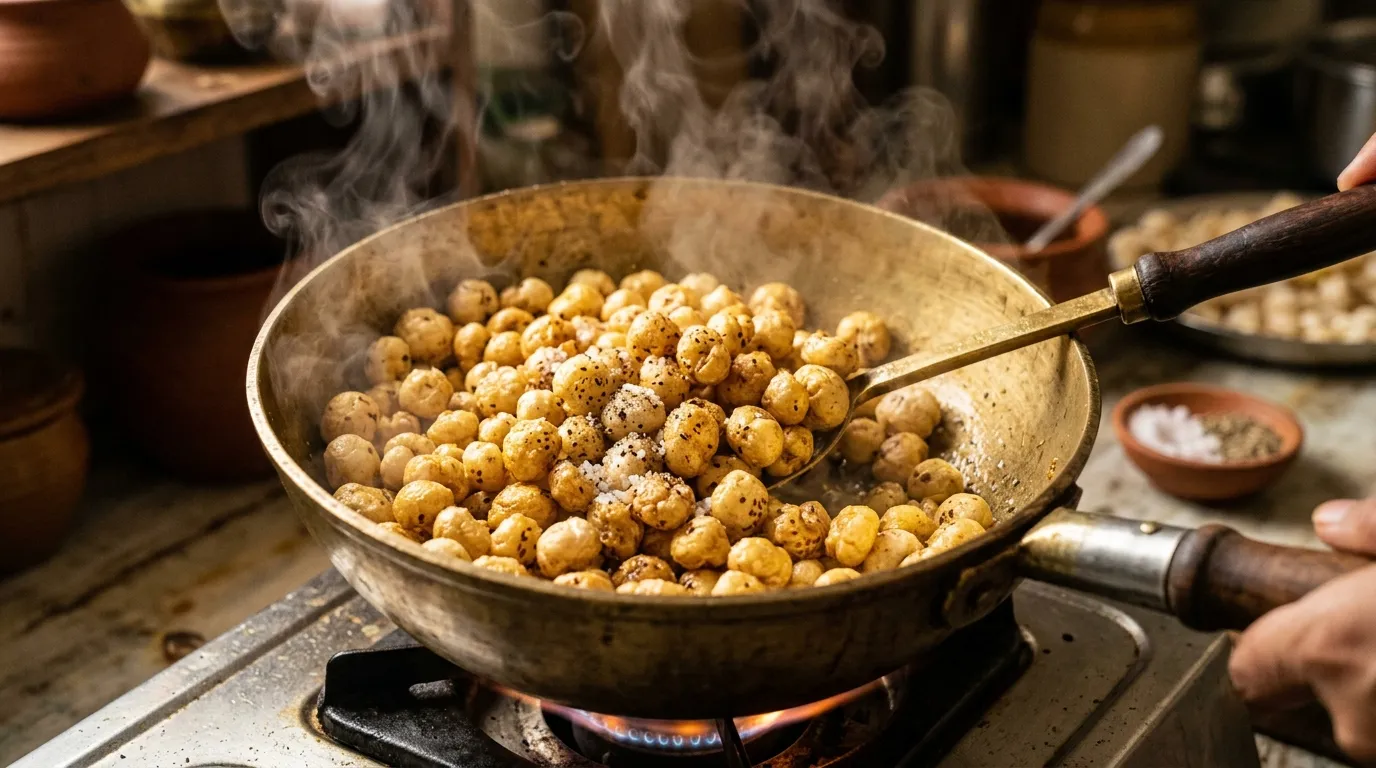
Classical Ayurvedic Preparations Using Makhana
Beyond eating Makhana as a simple roasted snack, Ayurvedic tradition incorporates it into several specific medicinal formulations and culinary preparations that are still in active use today. Here are three of the most significant:
Combined with Gokshura (Tribulus terrestris) and warm water, this decoction is traditionally prescribed for dysuria, urinary tract infections, and early-stage kidney stones. The combination is believed to reduce oxalate crystallisation and support diuresis.
Makhana ground with Ashwagandha root powder in warm whole milk with honey and ghee — a Vrishya (reproductive tonic) preparation prescribed for male sexual vitality, post-partum recovery, and general Shukra Dhatu (reproductive tissue) nourishment.
Makhana flour combined with Shatavari (Asparagus racemosus) powder, consumed with ghee and honey — a Rasayana preparation for women's hormonal balance, longevity, and skin quality. One of the most referenced Makhana-based formulas in the Ashtanga Hridayam.
The simplest and most widely used preparation — Makhana dry-roasted with rock salt (sendha namak) and ghee. The puffing process increases digestibility; ghee carries fat-soluble compounds to intestinal mucosa; rock salt stimulates digestive fire without aggravating Pitta.
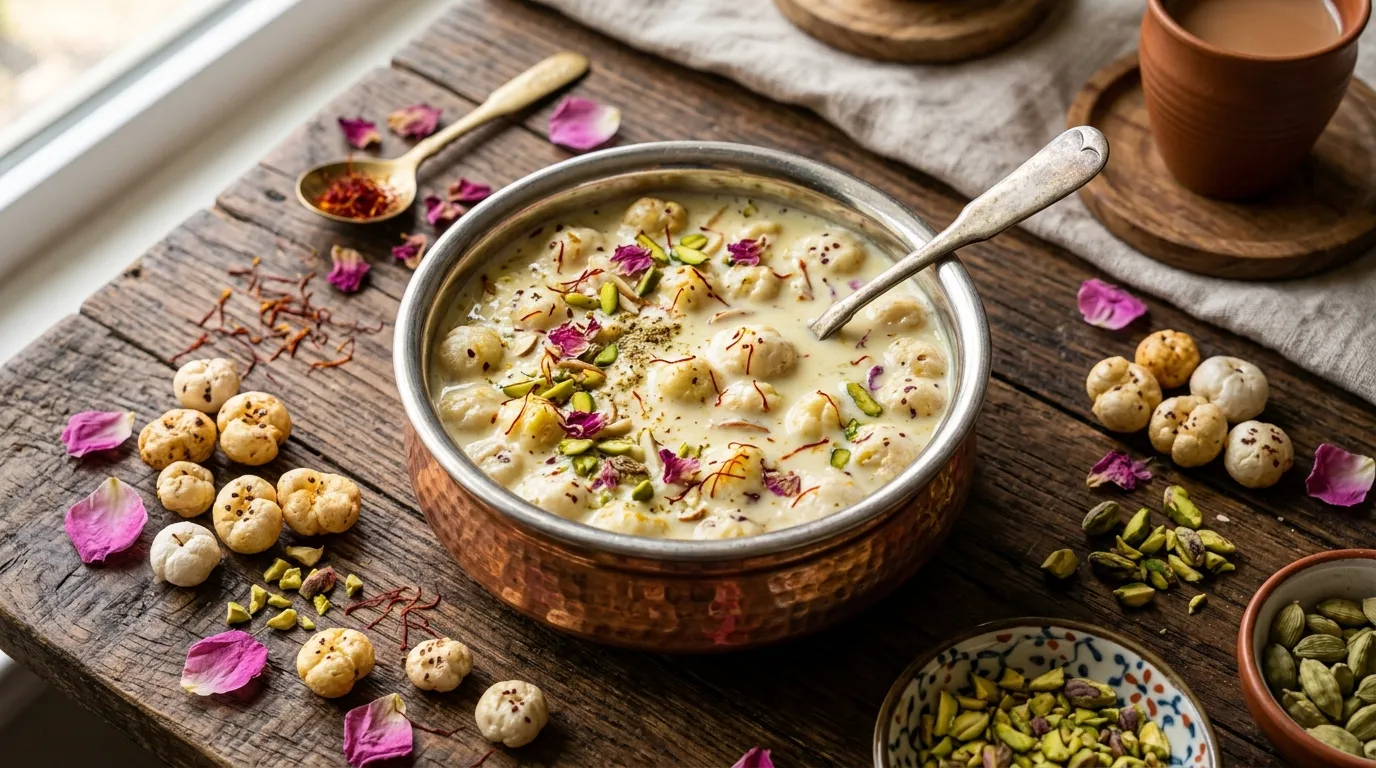
A Modern Makhana Kheer Recipe (Ayurvedic Method)
Makhana Kheer — The Ayurvedic Way
- 2 cups Makhana (puffed, whole)
- 1 litre whole cow's milk
- 2 tbsp pure cow's ghee
- 3 tbsp jaggery or coconut sugar
- 5–6 saffron strands (soaked in 1 tbsp warm milk)
- ½ tsp cardamom powder
- 1 tbsp blanched almonds, sliced
- Rock salt, pinch
Ayurvedic note: Consume warm, not cold. Avoid combining with citrus or very sour foods within 2 hours. Most beneficial when consumed 1–2 hours before sleep for Rasayana (rejuvenative) effect.
The Scientific Conversation: Where Ancient Meets Evidence

The academic field of Ayurvedic pharmacognosy — the scientific study of plant-based traditional medicines — has produced a growing body of research on Euryale ferox. Key findings that directly address classical Ayurvedic claims include:
Anti-Inflammatory Activity
A 2019 study in the Journal of Ethnopharmacology examined aqueous and ethanol extracts of E. ferox seed kernels in lipopolysaccharide-stimulated macrophage cell lines. The extract significantly reduced TNF-α, IL-1β, and IL-6 expression — three of the primary pro-inflammatory cytokines involved in chronic inflammation. This provides a molecular mechanism for the classical claim that Makhana pacifies Pitta — in Ayurvedic terms, excessive Pitta in the blood corresponds closely to what modern medicine would call systemic low-grade inflammation.
Renal Protective Effects
Animal model studies published in Phytomedicine (2020) showed that E. ferox seed extract administration in rats with cisplatin-induced nephrotoxicity significantly reduced creatinine and blood urea nitrogen levels compared to control groups, while improving histological markers of renal damage. While human clinical trials are needed, this provides mechanistic support for Makhana's centuries-old use as a kidney tonic.
Antioxidant and Anti-Ageing Activity
The L-isoaspartyl methyltransferase (LIMT) enzyme found in Makhana seeds has been studied in the context of protein L-isoaspartyl damage repair — a form of cellular maintenance that declines with age and has been associated with ageing-related cognitive decline in animal models. While the field is nascent and human evidence is absent, the presence of this enzyme at detectable levels in a regularly consumed food is unusual and theoretically supports the Rasayana classification.
Blood Glucose Regulation
This is the area where Ayurvedic and modern science are most closely aligned. The classical classification of Makhana as suitable for Prameha (diabetes-analogous conditions) is supported by two independent mechanistic pathways: the low glycaemic index (~35) reducing postprandial glucose spikes, and an in vitro study showing that E. ferox extract inhibits α-amylase and α-glucosidase activity — the same enzymatic mechanism targeted by the pharmaceutical drug acarbose.
The Ayurvedic Angle in Modern Markets
The Ayurvedic heritage of Makhana is not merely cultural context — it is a commercial and marketing asset of growing value in global wellness markets. Several trends converge here:
- Traditional Use as Novel Food Evidence: In EU Novel Food applications, documented history of traditional use in third countries is a valid alternative basis for approval. India's millennia-long, medically documented use of Makhana is a significant asset in any Novel Food dossier.
- Ayurvedic Beauty and Wellness: The global Ayurveda market was valued at USD 12.5 billion in 2024 and is projected to exceed USD 21 billion by 2030. Makhana's established Ayurvedic credentials position it as a natural fit for Ayurveda-adjacent product launches in supplements, beauty foods, and functional foods.
- Indian Diaspora Markets: For the 30+ million members of the Indian diaspora globally, Makhana's Ayurvedic identity is not an abstraction — it is lived cultural memory. The fasting food market alone represents a significant recurring revenue opportunity for importers positioned in diaspora retail channels.
- Conscious Consumer Alignment: The global "food as medicine" movement, mindfulness-based nutrition, and interest in traditional food systems all create receptive markets for a product with Makhana's heritage credentials.
Important Nuances: What Ayurveda Also Says
Intellectual honesty requires acknowledging that Ayurvedic texts do not present Makhana as a universal panacea. Classical contraindications and cautions include:
- Kapha excess conditions: Obesity, oedema, excessive mucus production, and sluggish digestion — conditions classified as Kapha excess — call for moderation. The sweet, heavy quality of Makhana can worsen these conditions if consumed in large quantities.
- Ama (undigested metabolic waste): When digestive fire (agni) is severely compromised, the texts caution against nourishing, sweet foods like Makhana, as they can contribute to Ama formation. In modern terms, this aligns with recommendations to avoid complex carbohydrates during acute digestive illness.
- Specific Ayurvedic preparation requirements: Most Makhana preparations in the texts are cooked — with ghee, spice, or milk. Raw, unprocessed Makhana is rarely recommended. This aligns with the reduction of anti-nutritional factors (phytic acid, tannins) through the puffing process.
- Individual constitution: Ayurveda is fundamentally personalised medicine — the same food is not recommended identically across all constitutions. Blanket health claims disconnected from individual Prakriti (constitution) are antithetical to classical Ayurvedic practice.
Convergence: The Future of Makhana Research
The story of Makhana in Ayurveda is ultimately a story about epistemology — about how different knowledge systems arrive at similar truths through different pathways. Traditional Ayurvedic practitioners arrived at Makhana's therapeutic properties through millennia of systematic clinical observation, patient feedback, and philosophical reasoning about the nature of food and the body. Modern food scientists arrive at similar conclusions through reductionist biochemical analysis, animal models, and controlled trials.
The convergence is not complete. Several classical claims — particularly the reproductive vitality applications, the anti-ageing Rasayana classification, and some specific condition treatments — remain at the level of mechanistic plausibility rather than clinical proof. Randomised controlled trials in human populations are needed, and researchers at several Indian and international institutions are actively pursuing this work.
But the areas of convergence are already substantial enough to reframe the conversation. Makhana is not a traditional food whose health claims are being charitably examined by modern science. It is a food whose molecular profile is increasingly well-characterised, whose bioactive compounds are increasingly understood, and whose traditional prescriptions are increasingly vindicated — at the level of mechanism, if not yet always at the level of human clinical proof.
"The 3,000-year Ayurvedic prescription of Makhana is not a coincidence to be explained away. It is a hypothesis to be tested — and the early evidence suggests it was a remarkably good one."
— Kavita Rajan, Ayurvedic Wellness Writer, Quantyra Labs